


Who Inspired Jane Austen?


What do you call the author who inspired Jane Austen?
While we should be referring to Frances Burney as a trailblazer or literary genius, upon hearing her name, most of us would simply say..."Who?"
My nighttime reading lately has been Rebecca Romney's Jane Austen's Bookshelf, which explores the books that inspired Jane Austen and plays right into my fascination with the story behind the story. I did my entire Master's thesis on the creative process of Elizabeth Peters, and will never not be interested in what inspired brilliant authors.
I must admit, however, that it's taking me a while to get through Jane Austen's Bookshelf because I keep taking thousand-page detours into the works she references!
Case in point: Cecilia: Memoirs of an Heiress by Frances Burney.
It might be the longest book I've ever read, and that's saying something. Coming in at a small-print 952 pages, I was shocked by its combination of compulsive readability and bafflingly complex prose.

About every third paragraph, I'd find my brain going: "??????" But then I'd simply re-read the same text, and it would all become clear. Her vocabulary wasn't particularly challenging, so I think it's the more antiquated sentence structure: while perfectly understandable, it's not exactly something you can breeze through.
How do we know Frances Burney inspired Jane Austen? For one, Austen references Burney in her own books. Take this passage from Northanger Abbey, for instance:
"'And what are you reading, Miss——?' 'Oh! It is only a novel!' replies the young lady, while she lays down her book with affected indifference, or momentary shame. 'It is only Cecilia, or Camilla, or Belinda'; or, in short, only some work in which the greatest powers of the mind are displayed, in which the most thorough knowledge of human nature, the happiest delineation of its varieties, the liveliest effusions of wit and humour, are conveyed to the world in the best-chosen language."
The astute reader will notice that Cecilia is one of the novels referenced in the most laudatory of terms, and Burney was also the author of Camilla. Two of the three books mentioned above? Burney's!

That's not all. In those days, self-publishing was quite common, and an author would occasionally raise funds to help cover the cost. The first time Jane Austen's name ever appeared in print, according to Romney's research, is as a donor for one of Burney's novels! (The donors' names were often included in the final novel.)
Need more evidence? The very line "pride and prejudice" can be found in Cecilia! The capitalized emphasis is not my addition, but how it appears in the original text:
“'The whole of this unfortunate business,' said Dr Lyster, 'has been the result of PRIDE and PREJUDICE. ...Yet this, however, remember; if to PRIDE and PREJUDICE you owe your miseries, so wonderfully is good and evil balanced, that to PRIDE and PREJUDICE you will also owe their termination...'"
Burney wasn't some hidden gem that only Austen knew and loved. In fact, she was one of the most celebrated authors of her day. According to Rebecca Romney:
"The politician and philosopher Edmund Burke and the painter Joshua Reynolds adored [her debut novel, Evelina]...[Samuel] Johnson, the most respected literary critic of the day, could recite entire scenes from memory and concluded that 'Henry Fielding never did anything equal' to the second part of Evelina. Even the king and queen read it. The scribbler became a superstar."
The more pecuniary-minded might be interested to know that Burney earned thousands of pounds for her novels, while other bestselling authors were lucky to net a few hundred. So what happened?
Why has history all but forgotten Frances Burney?
There are a few theories.
In her biography of the late bestseller, Margaret Anne Doody made an interesting observation that the "canon" seems to follow a bit of a pattern. If two male authors lived in the same era, they could both be considered classics. But for women, the allotment is far more strict.
"It is as if there were a quota for female fiction writers," she wrote, "preferably no more than one per century or at most per half-century. We have one already in Austen, the position is filled."
That's very possible.
It could also be the name recognition factor. After marrying a French noble who escaped the French Revolution, her name changed to Madame D'Arblay. Her diaries (as Madame D'Arblay) were later published, and readers learned that she was often called "Fanny" by her intimates. For some inexplicable reason, the publishing world was so charmed by this detail that they swapped out the name "Frances Burney" on her books for her nickname: Fanny.
And so, for basically the next hundred years, any book written by Frances Burney had the name "Fanny Burney" on the cover.
Even in the 1800's, this nickname carried less-than-scholarly connotations. Three names, one of which was clearly a nickname, might have deterred those omnipotent determiners of the literary canon from including "Fanny" on their list of must-reads.
In some ways, that's the perfect segue to let you know that I'll be returning to the brand name Vocabbett! Despite the fact that I bought the trademark to Renaissance Revival, a larger company with a similar name has decided I must abandon it, and it would cost more in legal fees to contest it than to simply change.
I'm choosing to see it as a blessing in disguise. If multiple names confused people in Frances Burney's case, there's no reason to believe I'm any more memorable. I'll wind down Renaissance Revival over the next few months, but I wanted to let you know first!
Heads up! This post contains affiliate links, which means I may earn a minuscule commission from Amazon at no added cost to you.
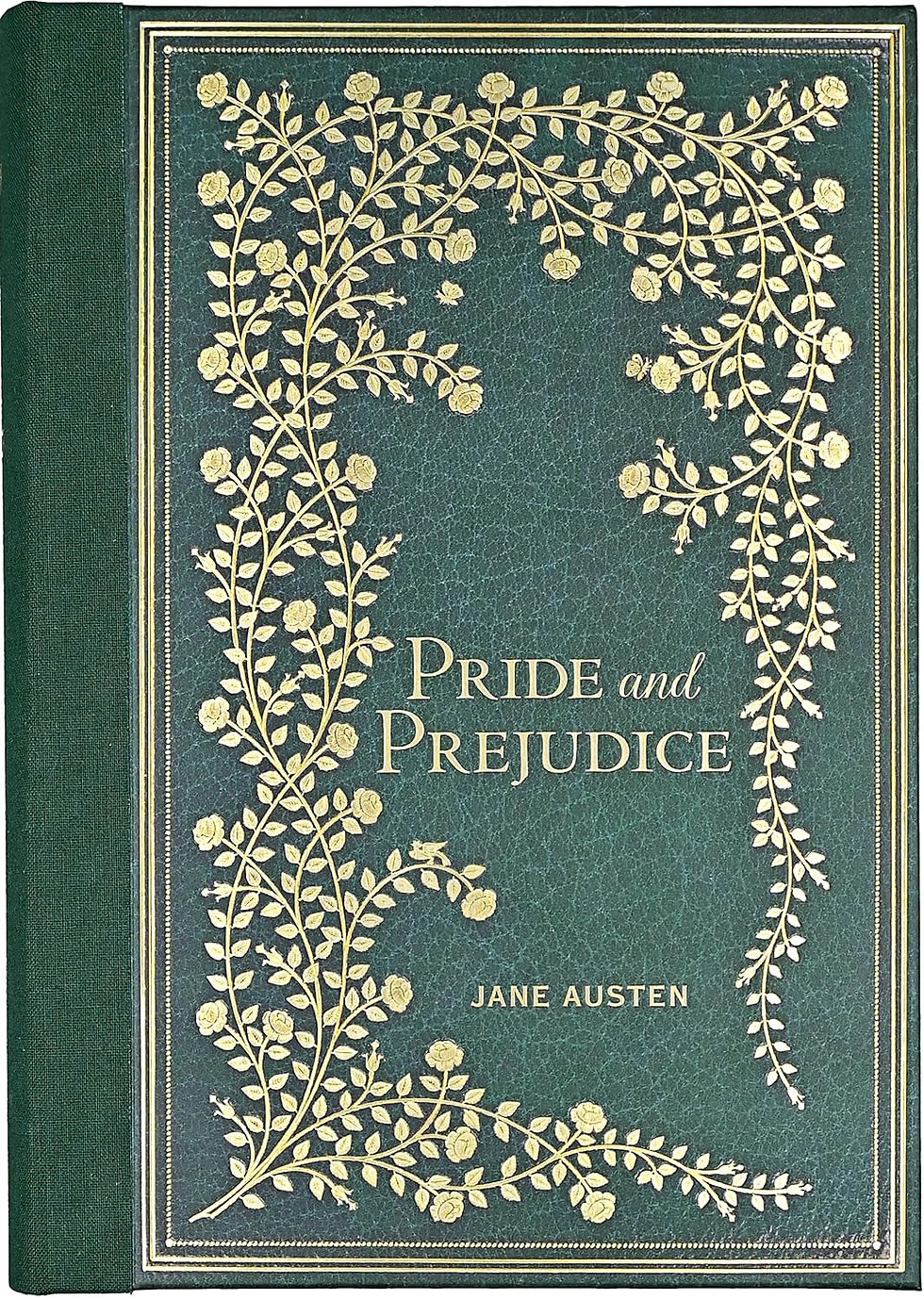
Shop this post:




"In her biography of the late bestseller, Margaret Anne Doody made an interesting observation that the "canon" seems to follow a bit of a pattern. If two male authors lived in the same era, they could both be considered classics. But for women, the allotment is far more strict.
"It is as if there were a quota for female fiction writers," she wrote, "preferably no more than one per century or at most per half-century. We have one already in Austen, the position is filled."
That's very possible."
This is a ridiculous, baseless claim.
We celebrate Jane Austen; we also celebrate George Eliot as well as Charlotte, Emily, and recently Anne Bronte, who all lived in the 19th century.
Why…
Great! 🙂